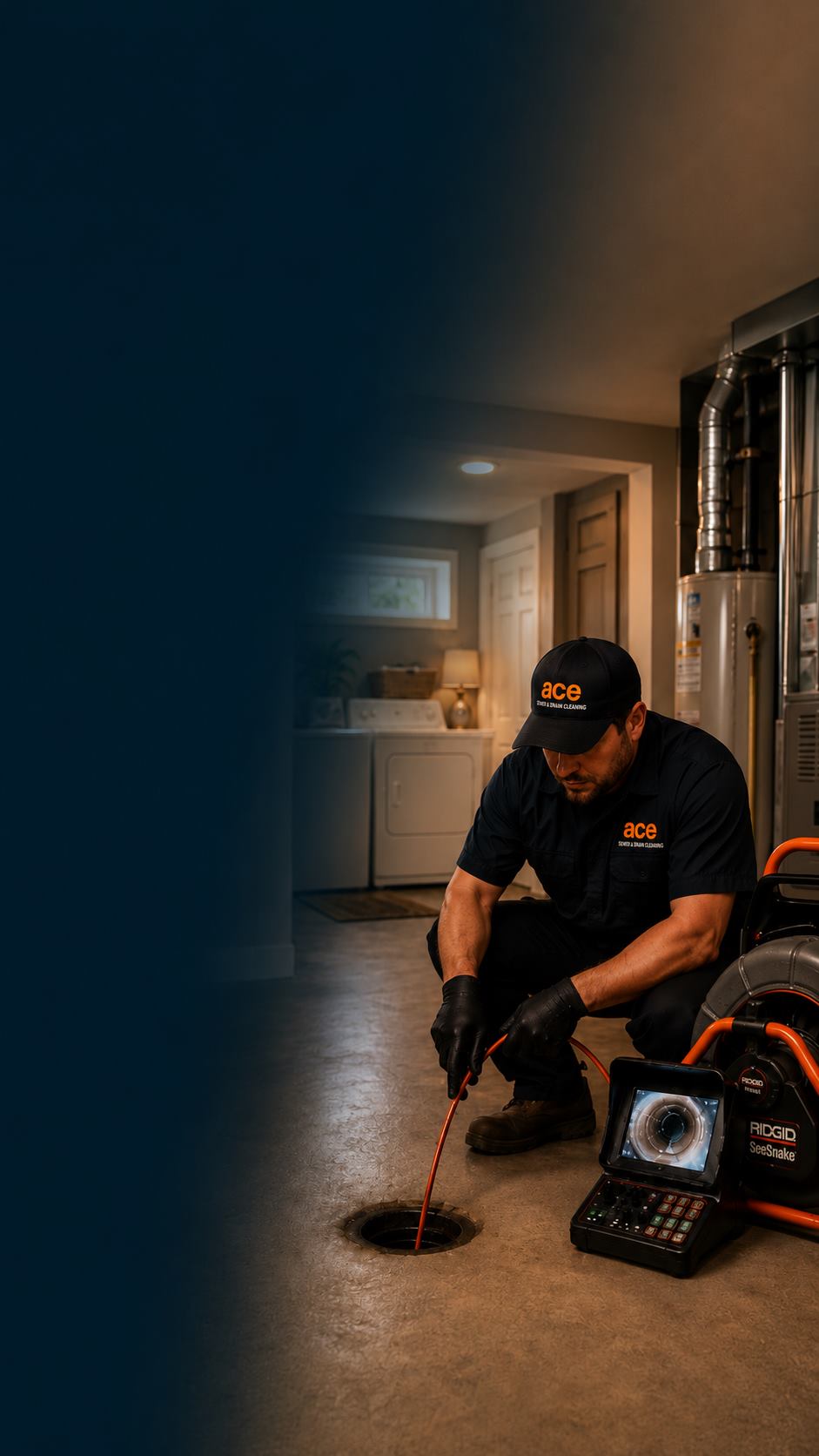
A clearer view of the problem
Camera inspection helps show the condition of the line, not just the symptom at the drain.
Sewer camera inspection helps identify what is happening inside a drain or sewer line without unnecessary guesswork. ACE provides camera inspection for recurring drain problems, sewer backups, suspected roots, main line issues, and post-cleaning verification. If the same drain problem keeps coming back, a camera inspection can help show whether the issue is buildup, roots, a sagging line, damage, or another restriction.
Sewer problems are not always visible from inside the home. A drain may be open again after cleaning, but the cause of the blockage can still be inside the line. Sewer camera inspection gives a clearer view of the pipe so the next step is based on what is actually happening underground.
Camera inspection helps show the condition of the line, not just the symptom at the drain.
After cleaning, inspection can help confirm that wastewater has a clear path through the line.
Roots, grease, sagging pipe, and damaged sections can all cause repeat backups.
If a repair is being considered, camera inspection can help narrow down the location and likely cause.
Instead of assuming the problem, inspection helps guide the next service recommendation.
A camera inspection is most useful when a drain or sewer issue keeps returning, affects more than one fixture, or may involve the main sewer line. It is also helpful after opening a blocked line, especially when the technician suspects roots, buildup, or pipe damage.
If the same drain or sewer issue keeps coming back, inspection can help identify why.
Mature trees and older sewer lines can lead to root intrusion and repeated blockages.
Older drainage systems may have rough sections, shifted joints, or low spots that collect debris.
After main line augering, a camera can help verify the line and check for repeat-risk areas.
Once the line is open, inspection can help show what caused the blockage.
Camera inspection can help support better decisions before digging, replacing, or repairing a sewer line.
A sewer camera inspection can reveal problems that are difficult to confirm from the surface. It can help locate restrictions, identify signs of pipe damage, and show whether a line may be likely to back up again.
Roots can enter through cracks, joints, or older pipe sections and create recurring restrictions.
Low spots can hold water and debris, increasing the chance of repeat clogs.
Grease and sludge can collect along the pipe walls and restrict flow.
Cracks, separated joints, or problem areas may be visible during inspection.
Camera inspection can help identify where the issue is located in the line.
The camera may reveal material that should not be in the drainage system.
A sewer camera inspection is a practical next step when the problem is unclear or recurring. The technician feeds a specialized camera through the drain or sewer line to view the inside of the pipe and look for visible causes of restriction or damage.
The inspection is usually performed through an accessible cleanout, drain opening, or approved access point.
The camera is moved through the line to look for roots, buildup, sags, cracks, or other visible concerns.
If the camera shows a restriction or damaged section, the technician can explain what was seen.
Depending on the findings, the next step may be cleaning, maintenance, repair referral, or monitoring.
Camera inspection is often most useful after a blocked line has been opened. Once water is flowing again, the camera can move through the line more effectively and help confirm what caused the backup. For recurring issues, post-cleaning inspection can show whether the blockage was caused by roots, grease, sagging pipe, a damaged section, or buildup that may need future maintenance.
If your sewer line has been cleared before and the problem returned, ask ACE about camera inspection after cleaning.
Not every sewer problem means the line needs to be replaced. Camera inspection can help show whether the issue appears to be a cleaning problem, a recurring root problem, a low spot, a damaged pipe section, or something that may need further repair assessment. This helps reduce guesswork before larger decisions are made. ACE can use camera inspection to document what is visible in the line and help guide the next recommendation.
Inspection helps show what is visible inside the pipe before major work is considered.
If a problem area is visible, the next step can be more specific.
Repeated sewer backups often need more investigation than basic drain clearing.
A sewer camera is a diagnostic tool. It helps show visible conditions inside the pipe, but it does not clear the blockage by itself and may work best after the line has been opened.
| If you notice this | It may point to |
|---|---|
| Showing visible roots, buildup, sags, or damage | Does not clear a blocked line by itself |
| Locating likely problem areas | Does not replace proper cleaning or repair work |
| Supporting repair or maintenance decisions | Does not guarantee every hidden issue is visible |
| Verifying the line after cleaning | Does not stop future backups without action |
| Reducing guesswork for recurring problems | Does not fix damaged pipe sections |
If the line is fully blocked, cleaning may be needed before the camera can inspect the pipe properly.
For recurring backups, basement floor drain issues, and multiple affected fixtures. Main line augering can help restore flow before inspection.
For active sewer backups, wastewater coming up through drains, and urgent drainage problems that need quick attention.
For individual sink, tub, shower, toilet, laundry, and floor drain clogs that may not involve the main sewer line.
For urgent drain and sewer problems that cannot wait for a routine appointment.
For sewer lines affected by roots, heavy buildup, or repeat restrictions.
In many cases, a blocked line should be cleaned first so the camera can move through the pipe properly. Camera inspection is often recommended after cleaning when the problem is recurring, the cause is unclear, or repair decisions are being considered.
A sewer camera inspection can show visible conditions inside the line, including roots, grease buildup, sludge, sagging sections, cracks, separated joints, debris, or the location of a restriction.
Once the line is open, the camera can usually travel farther and give a clearer view of the pipe. This can help confirm whether the blockage was caused by roots, buildup, damage, or another recurring issue.
Yes. Recurring backups are one of the main reasons to use sewer camera inspection. It can help identify visible causes that basic drain clearing may not fully explain.
No. A sewer camera is used for inspection, not cleaning. If the line is blocked, drain cleaning or main line augering may be needed before or along with the inspection.
Call for camera inspection if you have recurring backups, sewer odours, multiple affected drains, suspected roots, an older sewer line, or a blockage that keeps returning after cleaning.
Recurring drain and sewer problems usually need more than guesswork. ACE can inspect the line, help identify visible problem areas, and recommend the next step based on what is happening inside the pipe.